
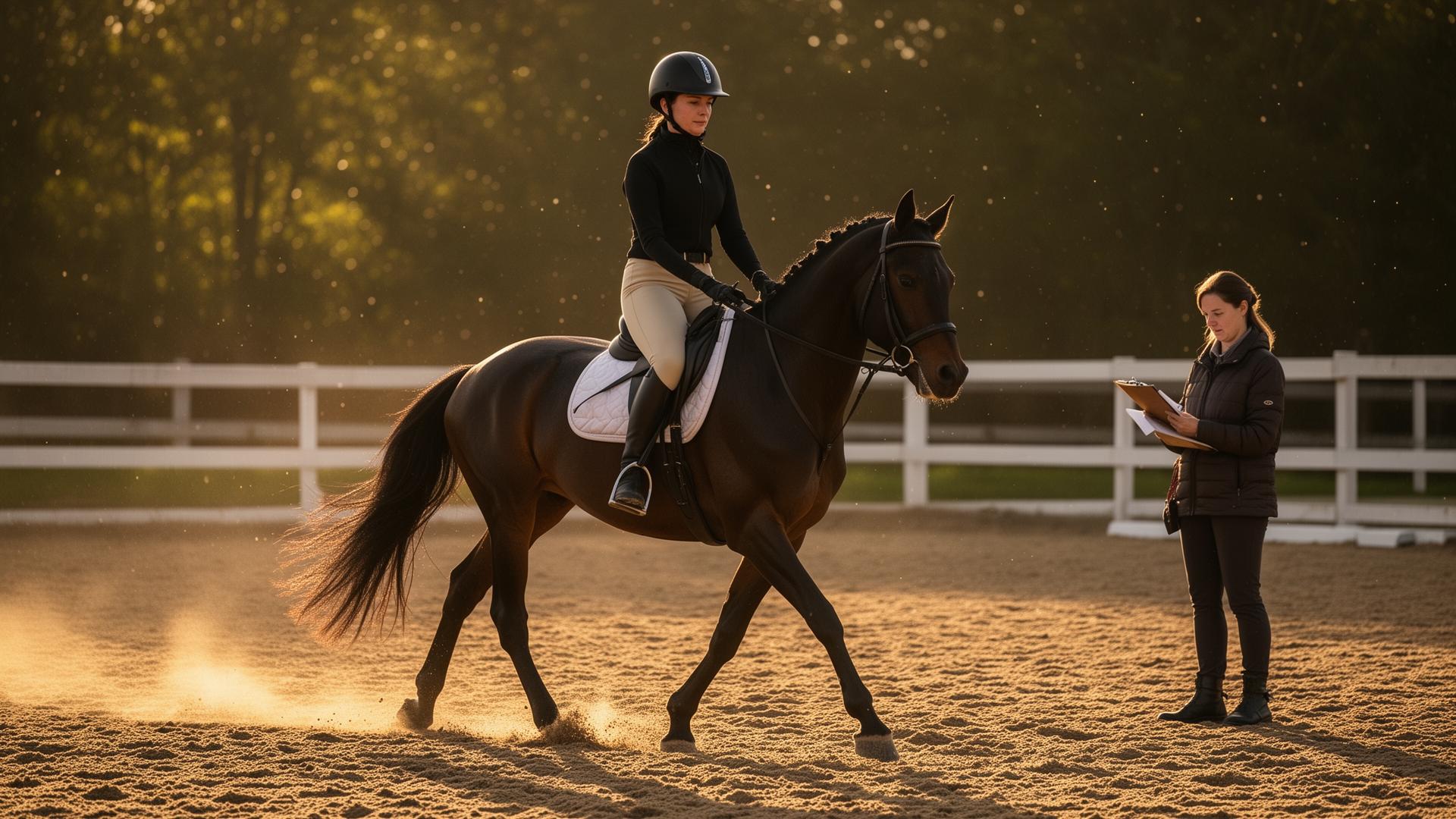
A trial ride is the buyer''s most informative hour of the entire purchase process. It is also the easiest hour to waste. Buyers who arrive without a plan see the horse the seller wants them to see; buyers who arrive with a structured approach see the horse as it is. This guide sets out what to ask in advance, what to observe before mounting, and what to test under saddle — for both first viewings and second trials.
For the broader purchase framework, see our How to Buy a Horse guide. For deeper editorial coverage of European buying practice, HorseWorld''s buyer education is a useful companion.
Before You Travel
Ask in advance:
- Will the horse be unworked when you arrive? Some sellers lunge or ride beforehand to settle a sharp horse.
- Can you see the horse caught from the field?
- Can you see it tacked up?
- Will the regular rider demonstrate first?
- Is there an arena and an option to hack out?
- Are tack and equipment included, or to be purchased separately?
If any answer is evasive, weigh the journey carefully. See our Red Flags guide for the warning signs that justify cancelling before you set off.
What to Watch Before Mounting
The horse tells you most of what you need to know before the saddle goes on.
- In the field. How does the horse behave? Does it come to be caught, or evade?
- In the stable. Calm? Restless? Defensive over food or rugs?
- Tacking up. Ear pinning, tail swishing, biting, or moving away from the girth all warrant follow-up.
- In hand. A walk and trot up on a hard, level surface tells you a great deal about soundness.
Take notes and photographs throughout. It is impossible to remember the detail of three viewings without them.
The Ridden Assessment
Watch the regular rider first, then ride the horse yourself. A useful sequence:
Walk
On a long rein. Observe self-carriage, willingness to march forward, and reaction to leg.
Trot
On both reins. Working trot, then medium where appropriate. Transitions within the pace and to walk.
Canter
On both reins. Strike-off, balance, and downward transition. The horse should be even and uncomplicated on both leads.
Lateral work, jumping, or specialist work
At the horse''s stated level — not beyond. The goal is to confirm the listing description, not to test the ceiling.
Hack
If at all possible. Behaviour outside the school is more informative than behaviour inside it: traffic, hazards, willingness to hack alone, and reaction to the unfamiliar.
What to Test
Beyond the basics, the most informative tests are simple:
- Halt and stand quietly for thirty seconds in walk, then trot, then canter.
- Rein-back three or four steps cleanly.
- Transitions from walk directly to canter to assess responsiveness.
- Stop and start under leg to gauge true willingness, not just trained obedience.
A horse that does these honestly and without resistance is significantly easier to ride than one that protests.
After the Ride
- Loading on a lorry or trailer, if not already demonstrated.
- The horse cooling down — heart and respiration recovery.
- A second trot-up on hard ground after work.
- Time in the stable, eating quietly.
Ask the seller for the original passport and any veterinary or competition documentation to review in person.
The Second Viewing
A second visit, ideally with an instructor who has not yet seen the horse, is one of the highest-value uses of a buyer''s time. Repeat the ridden assessment, ask different questions, and look for consistency. Horses with hidden problems often present differently on a second day.
The Trial Period at Home
For lower-value horses, a one- or two-week trial at the buyer''s yard is a reasonable request. Insurance and a written trial agreement protect both parties. For higher-value horses, an in-stable trial of a few days at a neutral venue is more common.
What to Do Before Committing
Whatever the price band:
- Arrange an independent pre-purchase exam.
- Verify FEI and national-federation results if claimed.
- Confirm registration with the relevant studbook (KWPN, Hanoverian Verband, ANCCE, etc.).
- Sign a written sales contract before transferring the balance.
For cross-border purchases, the documentation chain runs through TRACES NT — see our Importing a Horse to the EU guide.
Conclusion
A good trial ride is a structured conversation between buyer and horse. Watch carefully before the saddle goes on, ride to a plan, test the simple things, and trust your second viewing as much as your first. The buyers who choose well are the ones who give themselves the time and the framework to see clearly.
Frequently Asked Questions
Can I bring my trainer or instructor?
Yes, and you should. A second pair of eyes is the single most valuable piece of equipment at a viewing. Most sellers welcome it.
Should I ride the horse on the first visit?
If the horse has been honestly described and the seller is comfortable, yes. If not, a watching-only first visit followed by a return ridden viewing is reasonable.
How long should a trial last?
For an in-home trial, one to two weeks. For a neutral-venue trial, two to five days. Both should be governed by a written agreement covering insurance, care, and conditions for return.
What if the horse behaves badly during the trial?
Document the behaviour, photograph or video it if safely possible, and return the horse to the seller within the agreed terms. Do not feel obliged to persist.
Is it acceptable to ask for a second PPE if I am uncertain?
Yes, particularly for higher-value horses. A second opinion adds modest cost and meaningful confidence.