
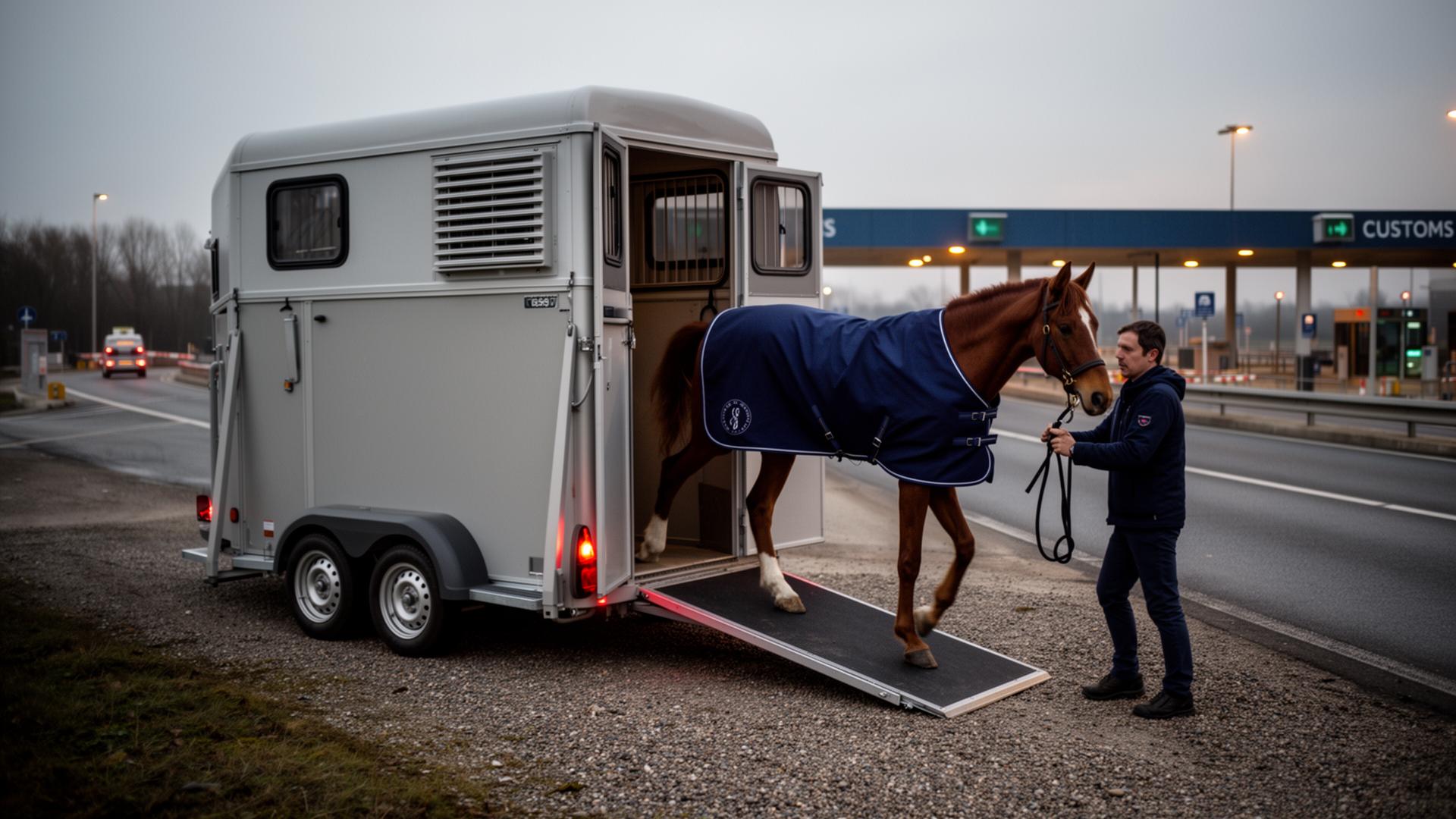
Importing a horse to the European Union is well-regulated, well-documented, and entirely manageable — provided the paperwork is correctly prepared in the right order. The most expensive mistakes are made by buyers who underestimate the lead time, attempt the process without a qualified shipping agent, or fail to confirm import requirements with both the country of departure and the country of arrival.
This guide outlines the framework. It is not a substitute for specialist customs and veterinary advice, which is essential for any individual import. For broader editorial coverage of international purchase practice, see HorseWorld''s international buying guides.
Before You Buy
Confirm three things before committing to a horse abroad:
- The country of origin''s export requirements. Each non-EU country has its own export protocol.
- The destination EU member state''s import requirements. Although harmonised at EU level, member states differ on VAT, equine identification updates, and quarantine.
- A qualified shipping agent. International horse transport is specialist work. Reputable agents handle bookings, TRACES NT entries, customs clearance, and on-arrival logistics.
For broader buyer guidance, see our How to Buy a Horse guide.
The Core Documents
1. The Horse Passport
Every equine resident in the EU must have a passport conforming to Regulation (EU) 2015/262. For horses imported from non-EU countries, an EU passport must be issued by the destination member state''s competent authority within 30 days of import, or before the horse is moved further within the EU — whichever is sooner.
2. The Universal Equine Life Number (UELN)
A 15-digit number that identifies the horse internationally. Most modern passports include it. The UELN database provides verification.
3. Health Certification
The veterinary export health certificate is issued by an official vet in the country of departure. It confirms the horse is free of relevant notifiable diseases, has been resident as required, and has been tested where required (typically EIA, dourine, glanders, and others depending on origin).
4. TRACES NT Entry
The EU''s official animal movement system. The destination must be entered into TRACES NT before the horse arrives at the EU border. This is typically handled by the shipping agent.
5. Customs Documentation
Including the commercial invoice, transport contract, and customs declaration. VAT and import duty (if applicable) are calculated at the EU border. For sport horses entering permanently, the standard EU import VAT rate of the destination member state applies; rates and exemptions vary.
The Process
Step 1: Pre-export checks (4–8 weeks before)
Blood tests, vaccinations, and any quarantine periods required by the destination. Your shipping agent will confirm the specific tests against the protocol for the origin country.
Step 2: Booking and route planning (2–4 weeks before)
Flight or road transport booked. EU entry point confirmed (typically a major air hub: Amsterdam, Liège, Frankfurt, Paris).
Step 3: Export documents finalised (1–2 weeks before)
Official vet inspection in country of origin. Export health certificate issued.
Step 4: TRACES NT entry
The shipping agent enters the consignment into TRACES NT.
Step 5: Transport and border control
The horse travels with the shipment. At the EU border inspection post, documents are checked and the horse may be physically examined. Customs clearance is completed.
Step 6: Onward transport to destination
Direct road transport to the buyer''s stable. Some destinations require an isolation or observation period — confirm with the destination member state authority.
Step 7: EU passport and identification
Within 30 days of arrival, the destination member state issues an EU passport. The horse is registered with the relevant national database.
Costs
Approximate ranges for typical European imports:
| Component | Indicative range (EUR) |
|---|---|
| Air freight (long-haul) | €6,000–€18,000 |
| Road transport (within Europe / from UK) | €1,500–€5,000 |
| Pre-export testing | €300–€1,200 |
| Export health certificate | €150–€600 |
| Customs clearance | €200–€700 |
| EU passport issuance | €100–€400 |
| Quarantine / isolation (if required) | €500–€2,500 |
| Shipping agent fee | €800–€3,000 |
| VAT and import duty | Variable — confirm with destination authority |
For high-value horses, comprehensive insurance during transit is essential and typically costs 1–2% of the horse''s declared value.
Common Pitfalls
- Underestimating lead time. Plan for at least eight weeks from purchase to arrival.
- Attempting DIY paperwork. The cost of a shipping agent is small relative to the cost of a single document error at the border.
- Failing to budget for VAT. Import VAT can substantially increase the total cost; confirm before purchase.
- Skipping the EU passport application. A horse without a compliant passport cannot legally move within the EU.
Conclusion
EU import is a manageable process when respected. The buyers who succeed are those who engage a qualified shipping agent early, budget realistically for all costs (not just the headline transport figure), and treat the documentation timeline as fixed rather than aspirational. Pair this guide with our pre-purchase exam and trial rides guides for the full international-purchase framework.
Frequently Asked Questions
How long does the full process take?
Eight to twelve weeks from purchase to arrival is typical, including testing, documentation, transport, and the destination passport process. Rushed imports almost always encounter avoidable problems.
Do I need a shipping agent?
For non-EU imports, effectively yes. The combination of TRACES NT, customs, veterinary documentation, and route planning is specialist work. Reputable agents pay for themselves through avoided errors.
Will I pay VAT on the import?
Usually yes, calculated at the destination member state''s standard rate on the horse''s declared value. Some categories (e.g. certain breeding or competition movements) attract different treatment; confirm with your shipping agent and the destination customs authority.
How quickly must the EU passport be issued?
Within 30 days of arrival, or before the horse is moved further within the EU — whichever is sooner.
Can I ride or compete the horse immediately on arrival?
Riding at home is unrestricted once the horse has cleared customs and any required observation period. Competition requires an FEI passport or national federation registration valid in the destination country. Allow several weeks for these to be updated.