
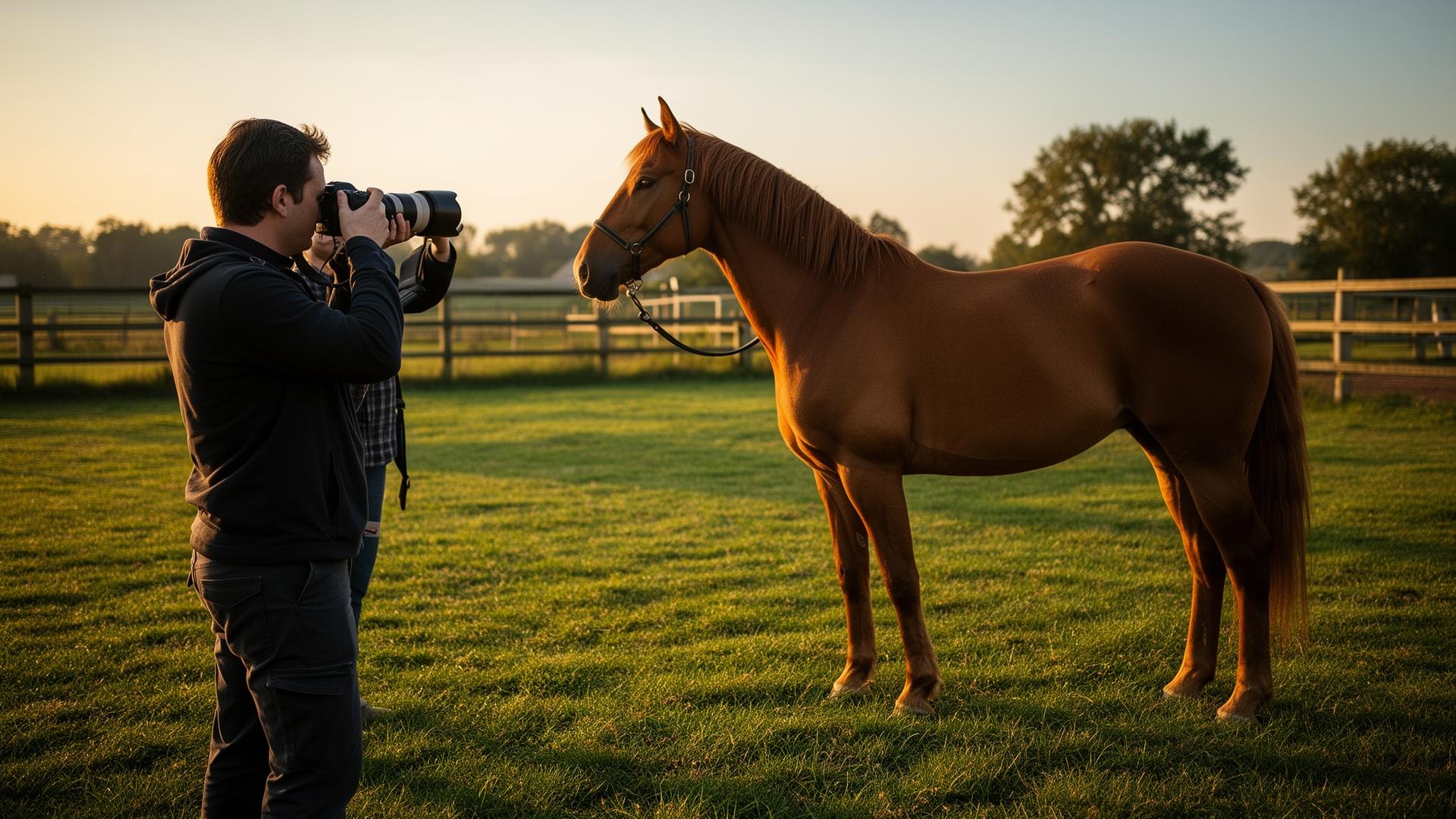
Buyers in 2025 decide whether to read a listing in under three seconds, almost always on a phone. The decision is made by the first image. Strong photography is no longer a nice-to-have for sellers — it is the single highest-leverage piece of presentation work. This guide covers the shots experienced buyers expect, how to set them up, and the avoidable mistakes that make even good horses look amateurish.
For the wider sales framework, see our Selling Your Horse guide, and for editorial context on the European sport-horse market, HorseWorld''s selling guides.
What You Need
You do not need professional equipment, but you do need:
- A modern smartphone (last three years) or any basic DSLR.
- A clean horse: bathed, mane and tail tidy, hooves picked and oiled if dry.
- Tidy turnout: clean tack, no rugs in shot, no lead ropes or buckets in the background.
- An assistant who can hold the horse and stand it correctly.
- An hour of even, indirect light — early morning or late afternoon is ideal.
The Conformation Shot
The most important image in any listing. Three views, in this order:
Left side
The horse stood square: a "perfect square" with the inside legs offset slightly. Ears forward, neck naturally arched (a treat or a sound from off-camera helps). Camera at the horse''s elbow height, perpendicular to the body. Frame the horse with a small margin of background on all sides. No riders, no people in shot.
Right side
The same setup, mirrored.
Front
Square and level on flat ground. Camera at chest height, perpendicular to the horse''s shoulders.
A fourth from behind (haunches) is a useful addition for breeding horses and sport horses being assessed for movement.
Ridden Shots
Buyers want to see the horse working, not posing. Capture:
- Walk on a long rein. Demonstrates natural movement and frame.
- Working trot on both reins. Continuous footage, ideally one minute per rein.
- Canter on both reins. Again, continuous.
- Lateral work or jumping if relevant to the horse''s level.
Film in landscape orientation. Stand at the long side of the arena, not the corner. Keep the horse in frame at all times; avoid panning quickly.
Free Movement and In-Hand
For young or unbroken horses, free-movement footage in a school or round pen is essential. Trot and canter on both reins, with the horse moving freely. For all horses, a clean trot-up in hand on hard, level ground reassures buyers about soundness and is the single most-requested clip after the conformation shot.
Stable and Handling Footage
Short, undramatic clips:
- The horse being caught from the field.
- Tacked up calmly.
- Loaded onto a lorry or trailer.
- Standing for the farrier (if available).
These reassure buyers about temperament more effectively than any written description.
Common Mistakes
- Heavy filters. They suggest something is being hidden. Use natural light and resist the urge to "warm up" or "brighten" images.
- Cluttered backgrounds. Muck heaps, washing lines, and other horses distract from the subject.
- Photographing in flat midday light. Harsh shadows obscure conformation. Wait for softer light.
- Portrait video. Always film in landscape; portrait video crops badly on listing platforms.
- Editing footage heavily. Long, single-take clips build trust. Edited highlights raise suspicion.
A Word on Drone Footage
Drones produce striking aerial clips and have a place in marketing high-value horses. They do not replace conformation shots and ridden footage on the ground, which is what buyers actually use to make decisions.
Conclusion
Good photography does not make a horse better — but it ensures the right buyer sees the horse as it actually is. Set aside an afternoon with help, capture the full set of shots in good light, and resist the urge to over-process. Combined with a well-written description (see our Writing a Listing guide) and a sensible price (see Pricing Your Horse), strong media is the difference between a listing that gets scrolled past and one that books viewings.
Frequently Asked Questions
Should I pay for a professional photographer?
For horses above €15,000 or for breeding stock, yes — the difference in presentation often justifies the cost. For lower-value horses, a careful afternoon with a phone is sufficient.
What about background music on video?
Avoid it. Buyers want to hear the horse — breathing, footfall, voice aids. Music suggests marketing.
How many photos should I post?
Six to ten is the sweet spot. Fewer leaves buyers wanting more; more dilutes the strongest images.
Should I show the horse jumping if it doesn''t compete?
Only if the schooling is genuinely correct. Poor jumping footage does more harm than no jumping footage.
Is it acceptable to use older photos if recent ones are difficult to take?
Only if clearly labelled with the date. Older images that misrepresent current condition are a serious red flag (see our Red Flags guide).