
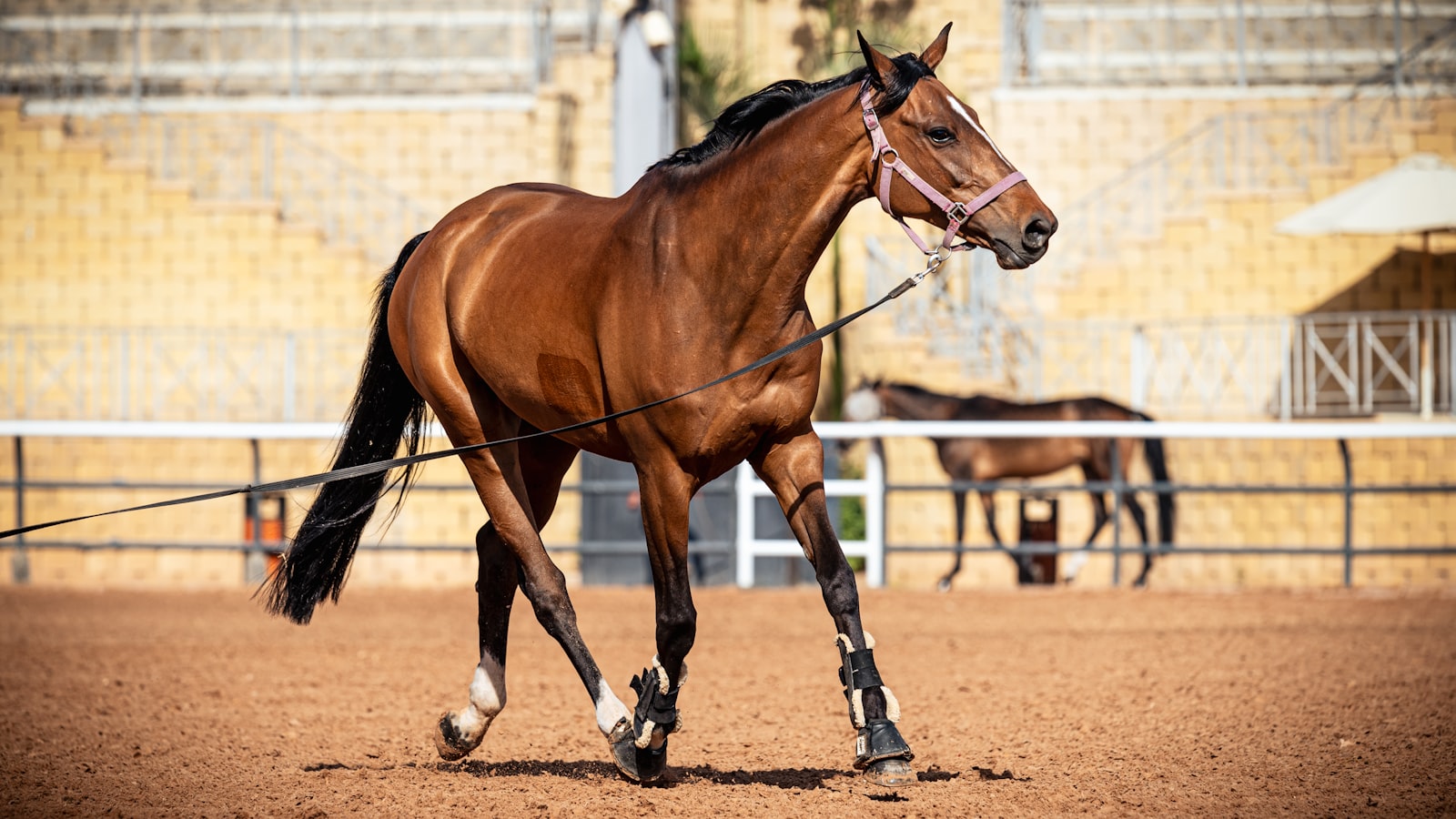
Training problems are usually education problems, and education problems are usually gaps left earlier. A horse that will not stand still, will not go forward from the leg, or braces against the hand is not being difficult; it is answering a question it was never taught.
This guide covers the fundamentals that apply whatever the discipline.
Start on the Ground
Groundwork is not a warm-up for real training. It is where the horse learns the vocabulary.
- Leading. Walk, halt and back up with the handler at the shoulder, on a loose rope, without pressure.
- Standing. Thirty seconds, then two minutes, without moving the feet. This single skill transforms mounting, farriery, veterinary work and loading.
- Yielding. Move the shoulders and quarters from light pressure on both sides.
- Handling everywhere. Ears, girth, legs, tail, clippers, hosepipe.
Ten minutes of groundwork before a ride reveals the horse's mood before you are on it.
The Training Scale in Practice
The classical scale — rhythm, suppleness, contact, impulsion, straightness, collection — is a diagnostic tool, not a curriculum. When something breaks, go back down the scale until it works.
Rhythm
Even, unhurried tempo in all three paces. Nothing above this works until this is true. Count strides aloud if the tempo drifts.
Suppleness
The horse swings through the back and neck. Test with long-and-low, gentle leg-yield and frequent changes of bend.
Contact
An elastic, consistent connection the horse seeks. Contact is produced by the hind leg, not the hand — a horse pulled into a shape is not on the contact.
Impulsion
Energy from behind, contained rather than rushed. More speed is not more impulsion.
Straightness
Equal on both reins, hind feet following front. Most horses need years of work on this and every horse has a stiffer side.
Collection
Weight shifted to the hindquarters. Only after the five below it are honest.
Structuring a Session
A workable 40-minute template:
- 10 minutes walk on a long rein, out of the arena if possible.
- 10 minutes suppling — large circles, changes of rein, transitions within and between paces.
- 15 minutes of one focused task — one exercise, one goal. Not five.
- 5 minutes stretching and walk to finish.
Finish on something the horse does well, even if it is simpler than where you started.
Frequency and Progress
- Four to five sessions a week suits most horses in work, with at least one day of hacking or turnout-only.
- Vary the surface and the environment; arena-only horses become arena-dependent.
- Expect months, not weeks. A genuine change in the way a horse carries itself takes 8–12 weeks of consistent work.
- Fitness builds faster than strength; strength builds faster than balance.
When It Is Not Training
Before treating a problem as behavioural, rule out:
- Pain — back, teeth, feet, ulcers, hocks.
- Saddle fit — the most common cause of sudden resistance.
- Feeding — a horse on excessive concentrates and limited forage is not calm.
- Turnout — a horse standing 22 hours a day cannot be expected to concentrate.
- Rider — a second pair of eyes on the ground, monthly at minimum.
Working With a Trainer
Regular instruction is the fastest route to progress at any level. Look for a trainer who explains why, who adapts to the horse in front of them, and whose own horses look happy in their work. Search professionals in the services directory.
Frequently Asked Questions
How long should a schooling session be?
Twenty to forty minutes of focused work is enough for most horses. Length is far less important than clarity and consistency.
My horse is fine at home and difficult at competitions. Why?
Environment is part of the training, not a separate issue. Take the horse out to quiet venues to stand, hack and school without competing until the venue itself becomes unremarkable.
Is lunging useful?
Yes, in short sessions with a clear purpose — rhythm, transitions, or assessing movement. Endless circles on a tight lunge do more harm than good.
At what age should a horse start ridden work?
Most European sport horses begin light backing at three to four, with a break afterwards, and build gradually from four onwards. Skeletal maturity continues to around six.
How do I fix a horse that rushes?
Rushing is nearly always tension or imbalance rather than enthusiasm. Work on rhythm through frequent transitions and large circles, check for pain and saddle fit, and resist the temptation to hold the horse back with the hand.