
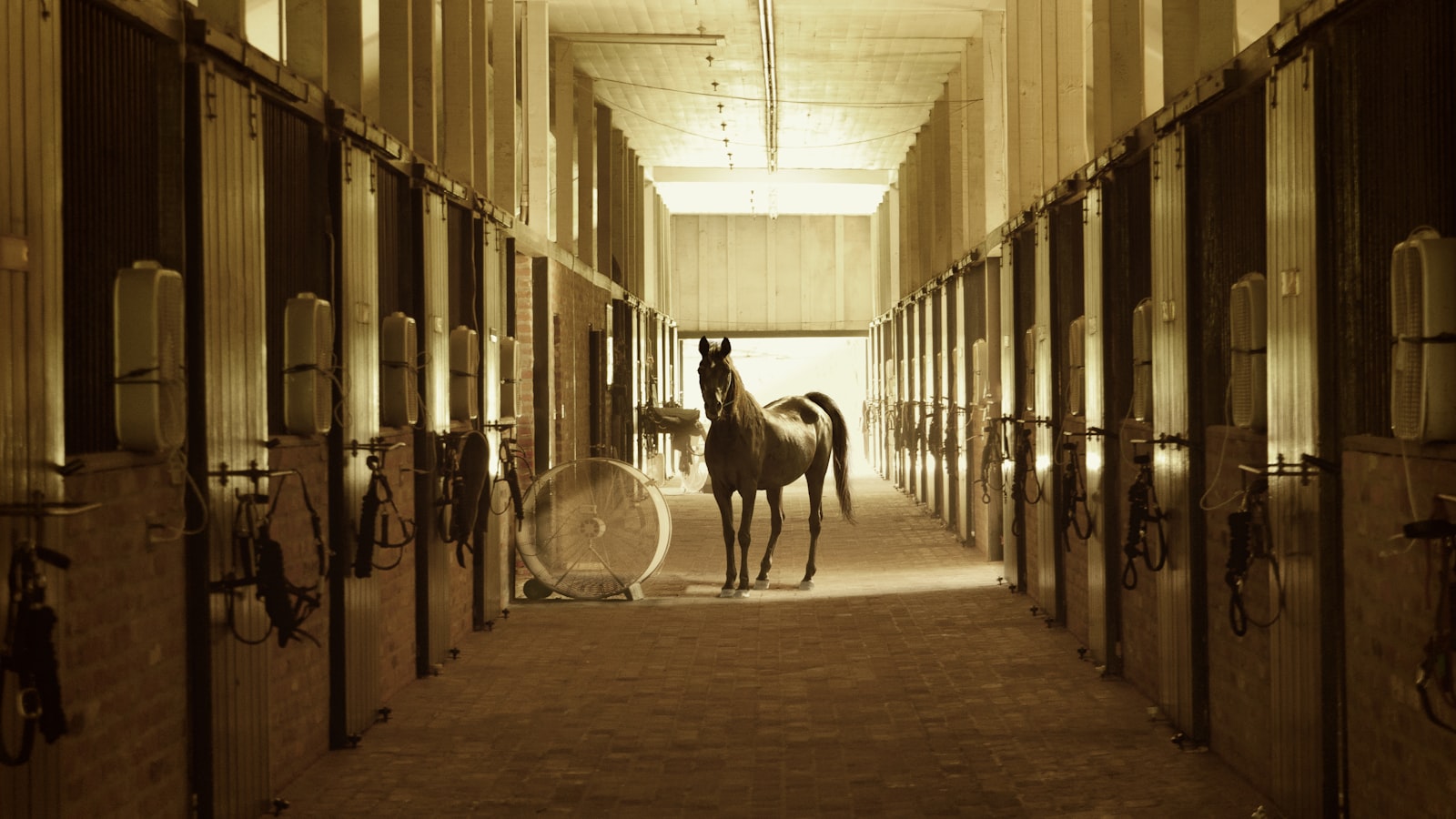
A yard is a system. When the system works, horses stay healthy, staff finish on time, and problems are noticed early. When it does not, the same three horses are always lame, feed bills drift upward, and nobody quite knows why.
This guide covers the fundamentals of running a yard well, whether it holds three horses or thirty.
Turnout and Grazing
- Rotate paddocks. Rest each field for at least four weeks in the growing season. Rotation controls both parasites and sward quality.
- Match group size to space. Overstocked fields poach in winter and are stripped by midsummer.
- Introduce new horses carefully. Over the fence for several days first, then in a large field with a companion the newcomer already knows.
- Harrow and top after resting, and topping before seed heads set keeps grass palatable.
- Poo-pick two to three times weekly. It is the highest-return job on any yard.
Stabling
- Aim for a minimum of 3.65 x 3.65 m for a 16hh horse, more for larger horses and foaling boxes.
- Ventilation over warmth: fresh air at height, without direct draught at horse level. Respiratory disease is far more common in tightly closed barns than in cold ones.
- Horses need to see and preferably touch neighbours. Isolation causes vices.
- Keep aisles clear. Most yard injuries to people happen over left-out equipment.
Bedding Comparison
| Bedding | Cost | Dust | Absorbency | Notes |
|---|---|---|---|---|
| Straw | Low | Moderate | Low | Eaten by some horses |
| Shavings | Moderate | Low | Good | Widely available |
| Wood pellets | Moderate | Very low | Excellent | Small muck heap |
| Hemp or flax | Higher | Very low | Excellent | Good for respiratory cases |
| Rubber matting + minimal bedding | High upfront | Low | N/A | Lowest ongoing cost |
Whichever you choose, deep-litter only works with genuine daily attention; done poorly it is the fastest route to thrush and ammonia damage.
Forage Storage
- Store off the ground, under cover, with air circulation.
- Buy from the same supplier and the same cut where possible — consistency matters more than the label.
- Reject bales that smell musty or feel warm.
- Steaming or soaking hay for respiratory-sensitive horses should be part of the routine, not an emergency measure.
Biosecurity
Every yard should have a written policy covering:
- Isolation of new arrivals for one to three weeks, with separate equipment.
- Temperature monitoring of new and returning horses for the first week.
- Vaccination requirements for all horses on the premises.
- Separate grooming kits, buckets and tack per horse.
- Disinfection of stables between occupants.
One outbreak of strangles costs more in lost livery and downtime than years of prevention.
Staffing and Routine
- Write the routine down, and post it. Horses do best on predictable timing.
- Keep a whiteboard or app for feed charts, medication, farrier and vet dates.
- Log every incident, however minor — patterns only become visible in writing.
- Handover between shifts should be verbal and written.
Recruiting reliable staff is the hardest part of yard management; competitive terms and a well-organised yard retain people far better than pay alone. Yards hiring can list roles in the equestrian jobs section.
Waste, Water and Compliance
- Site the muck heap away from watercourses and stables, and confirm local rules on storage and removal.
- Test and maintain water supply; automatic drinkers need weekly checking and freeze protection.
- Keep records of medicine use — required for equines not signed out of the food chain in the EU.
- Check insurance covers public liability for visitors, staff and liveries.
Frequently Asked Questions
How many horses can one person look after?
On a well-organised part-livery yard, roughly 8–12 for basic daily care. Competition yards with ridden work need one person per 4–6 horses.
Is 24/7 turnout better than stabling?
For most horses, yes, provided there is shelter, safe fencing, adequate forage and daily checks. Stabling suits horses in hard work, clipped horses in severe weather, and those on box rest.
How often should stables be disinfected?
Fully stripped and disinfected between occupants, and at least twice a year for permanent residents. Ammonia build-up damages airways long before it becomes obvious to people.
What is the biggest avoidable cost on a yard?
Wasted forage and repeated small veterinary bills from preventable injuries. Both are fixed by routine: consistent feeding and a weekly walk of fencing and fields.
Do I need written livery contracts?
Yes. State the service level, notice period, payment terms, vaccination requirements and what happens in a veterinary emergency when the owner cannot be reached.